
ITIL5MPT_TRN: ITIL (Version 5) Managing Professional Transition: Transformation Module – with Exam
About this Course
This module must be registered together with ITIL (Version 5) Managing Professional Transition: Product, Service, Experience, as both modules are required to complete the ITIL (Version 5) Managing Professional Transition course.
To achieve the ITIL (Version 5) Managing Professional designation, learners must successfully complete the Managing Professional Transition course which consists of two modules, and two certification exams:
• ITIL MPT: Product, Service, Experience (PSE)
• ITIL MPT: Transformation (Transform)
There is no required order. You may take either course first and complete the second when it best fits your schedule.
We intentionally schedule the courses separately to give learners time to prepare for and pass the first exam before attending the second course and sitting for the second exam.
Same designation. Same outcome. Flexible pathway.
Choose the sequence that works best for your schedule.
This ITIL® Managing Professional Transition (Version 5) course is designed for experienced ITIL professionals who need a clear, efficient path to update their knowledge to ITIL (Version 5). Rather than repeating existing knowledge, this course focuses exclusively on the changes and key enhancements introduced across Foundation, Product, Service, Experience, and Transformation. It is the most efficient way for experienced ITIL professionals to move forward without re-learning concepts they already know.
Digital products, services, customer expectations, and transformation priorities continue to evolve. This course helps established ITIL professionals efficiently refresh and extend their knowledge so they can remain aligned to modern digital product and service management practices and future-ready roles. This “changes-only” approach closely parallels the concise, outcome-oriented positioning used on your live Foundation page.
Audience Profile
ITIL Managing Professional Transition (Version 5) is intended for professionals who have already invested in ITIL 4 or ITIL v3 certifications and need a straightforward upgrade route. It is suitable for professionals at all levels and across all types of organizations involved in digital product and service management.
At Course Completion
Learners acquire an understanding of:
- The key enhancements and changes from ITIL 4 to ITIL (Version 5)
- Updates across Foundation, Product, Service, Experience, and Transformation
- How the new guidance supports future-ready roles and capabilities
- How updated practices enable stronger alignment of product and service teams
- How ITIL (Version 5) supports improved customer trust and return on digital investment
ITSM Academy’s transition training is designed to protect prior learner investment while supporting efficient progression to the latest guidance. Because the course is focused only on what has changed, learners can concentrate on the enhancements that matter most. This aligns with the “focused only on what has changed” message in the PDF and with the concise value framing used on your Foundation page.
Outline
ITIL (Version 5) MPT: Transformation Module introduces the ITIL Transformation Model, a practical and adaptable framework for organizational transformations. Learners acquire practical, scalable guidance they can use to successfully lead, support, and engage in transformation initiatives.
This course covers key ITIL (Version 5) terms and concepts, the ITIL Transformation Model, and how ITIL, AI and other frameworks such as DevOps and PRINCE2 enable and support product and service management.
Module 1: Key ITIL concepts
- Key ITIL models
- The characteristics of digital products and services
- How digital products and services create value
- Digital product and service management (DPSM)
- The scope and purpose of the ITIL Product and Service Lifecycle Model
- The lifecycle management activities of digital products and services
- The ITIL Value System
- Continual improvement vs. transformation
- The characteristics of organizational change
Module 2: The ITIL Transformation Model
- The three common patterns for transformation: initiation, governance, and execution
- How each pattern type supports transformation work
- The four layers of transformation (governance, positioning, execution, learning) and their roles
- How the ITIL Transformation Model is applied in practice
- The twelve stages of the ITIL Transformation Model
- How to apply the twelve stages in the correct sequence
- How ‘ordered’, ‘complex’, and ‘chaotic’ contexts influence transformation
Module 3: Initiation Patterns
- The key characteristics of the five initiation patterns
- How an initiation pattern influences scope, sponsorship, timing, and methods
- The tools/methods/techniques that could contribute to the initiation pattern
Module 4: Governance Patterns
- Common BAU governance patterns
- Common transformation governance patterns
- BAU vs. transformation governance patterns
- How governance supports alignment, decision making, and oversight in transformation
Module 5: Execution Patterns
- The three execution patterns (implement, discover, contain) and when each is used
- How transformation work is executed using the implement, discover, and contain patterns
- Which execution pattern fits different transformation situations
- Applying the correct execution pattern to simple transformation examples
Module 6: End-to-End Transformation Example
- The purpose of the 'transition’ activity
- Describing an end to end transformation example
- Assessing an end-to-end transformation example
Module 7: Measurement, learning, and synthesis
- How to apply key transformation tools, methods, and techniques
- How progress and outcomes of transformations are measured
- The benefits and the potential issues of using measurements in transformation
- How signals and lessons are captured, evaluated, and integrated into the organization’s value system
Module 8: ITIL and AI
- How AI supports readiness assessments and adaptive governance
- How AI and automation influence tools, methods, and techniques
- The ITIL AI Capability Model
- How AI governance supports transformation and effective implementation
Module 9: ITIL and Other Frameworks
- How ITIL and DevOps complement each other across the product and service lifecycle
- How ITIL practices collaborate with DevOps ways of working
- Why project management is important when applying ITIL practices
- How ITIL can be combined with PRINCE2 to deliver products and services effectively
Course Includes:
-
- Access to ITSM Academy's Learner Portal - my.itsmacademy.com - extends the classroom experience with online content and tools
- Digital learner manual (excellent post-class reference)
- ITIL (Version 5) Reference Card
- Research Paper - WhatIs? ITIL (Version 5)?
- Learner Personal Action Plan
- Memory exercises, study aids and sample exams
- Instructor-led education and exercise facilitation
- GAME ON! An Interactive Learning Experience®
- Participation in unique in-class assignments
- In-class exam preparation
- Exam voucher, which includes access to the official digital eBook (upon redeeming voucher)
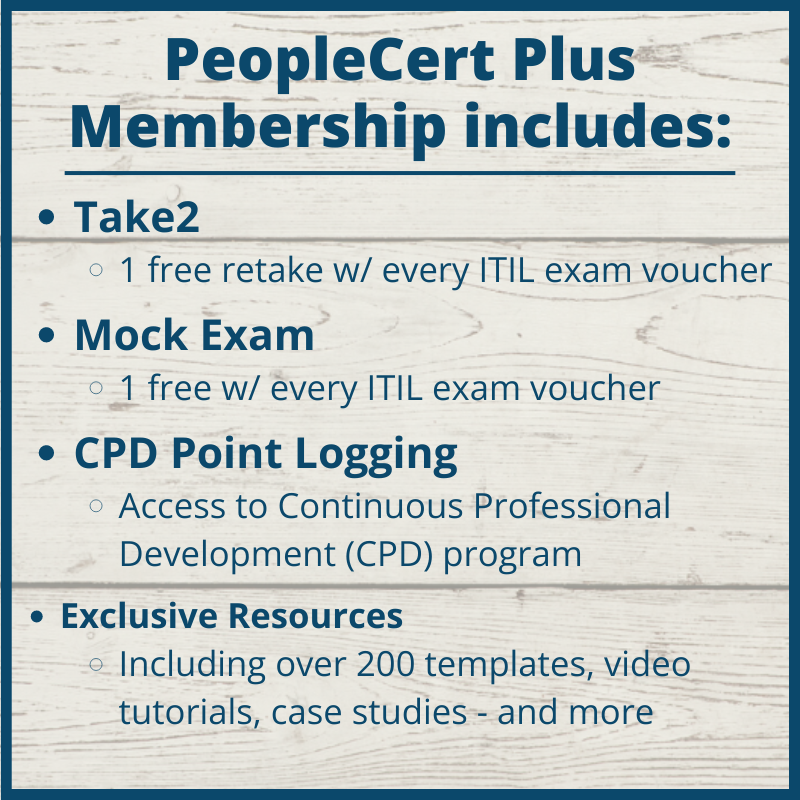
- PeopleCert Plus Annual Membership (not included in Epic class price, can be sourced from our website or by the learner directly from PeopleCert - the owners of ITIL.)
- Access to ITSM Academy's Learner Portal - my.itsmacademy.com - extends the classroom experience with online content and tools
Prerequisites
- ITIL 4 Managing Professional → Earns the ITIL (Version 5) Managing Professional designation, or
- ITIL 4 Master → Earns the ITIL (Version 5) Master designation, or
- ITIL v3 Expert → Earns the ITIL (Version 5) Managing Professional designation, or
- ITIL v3 Master → Earns the ITIL (Version 5) Master designation
- Attend an accredited training (mandatory)
Certification: Two multiple-choice exam(s), open-book exams. Read more about the open book exam experience.
- ITIL MPT: Product, Service, Experience (PSE). 120-minute, case story-based, 40 multiple choice questions. 70% to pass.
- ITIL MPT: Transformation (Transform). 90-minute, case story-based, 40 multiple choice questions. 70% to pass.
>>Official ITIL publications are available for learners who would like access to the reference materials for their open-book exam. You can purchase them here.<<

ITIL® is a registered trademark of the PeopleCert group. Used under licence from PeopleCert. All rights reserved. Used under licence from PeopleCert. All rights reserved.