
ITIL5SRV: ITIL (Version 5) Service Certification Course with Exam
About this Course
ITSM Academy’s ITIL® (Version 5) Service certification class is one of the Managing Professional courses in the ITIL (Version 5) qualification scheme and focuses on digital service management across the full lifecycle. Using the ITIL Product and Service Lifecycle Model, learners gain the capabilities needed to deliver, operate, and support services in modern, complex environments.
Modern service delivery spans ecosystems—cloud platforms, partners, and multiple providers. ITIL Service emphasizes end-to-end accountability, ensuring services perform consistently across organizational and supplier boundaries.
Learners explore the digital service provider value chain, including:
discover, design, acquire, build, transition, operate, deliver, and support—applied dynamically to reflect real-world service delivery.
In this certification course, you will learn how to:
- Manage digital services across the full lifecycle
- Deliver resilient, reliable, and scalable service operations
- Align services with product roadmaps, customer needs, and business strategy
- Coordinate across providers, platforms, and internal teams
- Break down silos and enable cross-functional collaboration
Audience Profile
This course is designed for professionals responsible for service delivery and operations across the digital service lifecycle. This includes service managers, service owners, operations and support teams, and those working within internal IT organizations or managed service providers who need to manage digital products and services end-to-end. Related roles include Service Manager, Service Owner, Service Delivery Manager, Site Reliability Engineer (SRE), Incident Commander, Knowledge Curator, Enterprise Architect, Solutions Architect, IT Operations Manager, Portfolio Manager, Chief Digital Officer, and service management consultants. This course is also mandatory for individuals striving to obtain the ITIL (Version 5) Managing Professional designation.
At Course Completion
Learners acquire an understanding of:
- Digital products and services
- The ITIL Product and Service Lifecycle
- Lifecycle management activities (from the service provider perspective)
- Managing the end-to-end lifecycle
- How value streams integrate lifecycle stages
- How AI and automation affects the methods and tools used for service management
- How ITIL, DevOps and PRINCE2 are complementary in the management of the product and service lifecycle
Outline
ITIL (Version 5) Service introduces the core principles of modern digital service management. Learners build a practical understanding of how to design, deliver, operate, and continually improve digital services across the ITIL Product and Service Lifecycle.
This course covers key ITIL (Version 5) terms and concepts, product and service lifecycle management activities (from the service provider perspective), and how ITIL, AI and other frameworks such as DevOps and PRINCE2 enable and support product management.
Module 1: Key concepts of digital product and services
- The characteristics of digital services
- How digital products and services create value
- The scope and purpose of the ITIL Product and Service Lifecycle Model
- The lifecycle management activities of a digital service
- The benefits of the ITIL Product and Service Lifecycle management activities from a service provider perspective
- The challenges of the ITIL Product and Service Lifecycle management activities, from a service provider perspective
- How organization's value chain activities support the ITIL Product and Service Lifecycle
Module 2: Discover
- The purpose of the 'discover' activity
- The key concepts of the 'discover' activity
- How vision, positioning, and portfolio inform discovery
- The practices enabling the 'discover' activity and their role in the activity
- The outputs of the 'discover' activity
- Applying the steps of the 'discover' activity
- The critical success factors (CSFs) and metrics of the 'discover' activity
- Applying practical recommendations for effective/successful discovery
Module 3: Design
- The purpose of the 'design' activity
- The key concepts of the 'design' activity
- The practices enabling the 'design’ activity and their role in the activity
- The outputs of the 'design' activity
- Applying the steps of the 'design' activity
- The critical success factors (CSFs) and metrics of the 'design' activity
- Applying practical recommendations for effective design
Module 4: Acquire
- The purpose of the 'acquire' activity
- The differences between the acquisition of technology, people, and third-party services
- The key concepts of the 'acquire' activity
- The practices enabling the 'acquire’ activity and their role in the activity
- The outputs of the 'acquire' activity
- Applying the steps of the 'acquire' activity
- The critical success factors (CSFs) and metrics of the 'acquire' activity
- Applying practical recommendations for effective acquisition
Module 5: Build
- The purpose of the 'build’ activity
- The integration of design into the 'build' activity
- The key concepts of the 'build' activity
- The practices enabling the 'build’ activity and their role in the activity
- The outputs of the 'build' activity
- Applying the steps of the 'build' activity
- The critical success factors (CSFs) and metrics of the 'build' activity
- Applying practical recommendations for effective build
Module 6: Transition
- The purpose of the 'transition’ activity
- Approaches to product transition
- The key concepts of the 'transition' activity
- The practices enabling the 'transition’ activity and their role in the activity
- The outputs of the 'transition' activity
- Applying the steps of the 'transition' activity
- The critical success factors (CSFs) and metrics of the 'transition' activity
- Applying practical recommendations for effective transition
Module 7: Operate
- The purpose of the 'operate’ activity
- The key concepts of the 'operate' activity
- The practices enabling the 'operate’ activity and their role in the activity
- The outputs of the 'operate' activity
- Applying the steps of the 'operate' activity
- The critical success factors (CSFs) and metrics of the 'operate' activity
- Applying practical recommendations for effective product operation
Module 8: Deliver
- The purpose of the 'deliver’ activity
- How service delivery activities enable value co-creation
- The key concepts of the 'deliver' activity
- The practices enabling the 'deliver’ activity and their role in the activity
- The outputs of the 'deliver' activity
- Applying the steps of the 'deliver' activity
- The critical success factors (CSFs) and metrics of the 'deliver' activity
- Applying practical recommendations for effective delivery
Module 9: Support
- The purpose of the 'support’ activity
- The key concepts of the 'support' activity
- The practices enabling the 'support’ activity and their role in the activity
- The outputs of the 'support' activity
- Applying the steps of the 'support' activity
- The critical success factors (CSFs) and metrics of the 'support' activity
- Applying practical recommendations for effective support
Module 10: Lifecycle Management
- Managing the end-to-end lifecycle
- The AI Capability Model
- How the use of AI can support service management
- How ITIL and other frameworks (e.g., DevOps and PRINCE2) enable and support the management of the product and service lifecycle
Course Includes:
-
- Access to ITSM Academy's Learner Portal - my.itsmacademy.com - extends the classroom experience with online content and tools
- Digital learner manual (excellent post-class reference)
- ITIL (Version 5) Service Reference Card
- ITIL Service Lifecycle Management Activities Reference Guide
- Research Paper - WhatIs? ITIL (Version 5)
- Learner Personal Action Plan
- Memory exercises, study aids and sample exams
- Instructor-led education and exercise facilitation
- GAME ON! An Interactive Learning Experience®
- Participation in unique in-class assignments
- In-class exam preparation
- Exam voucher, which includes access to the official digital eBook (upon redeeming voucher)
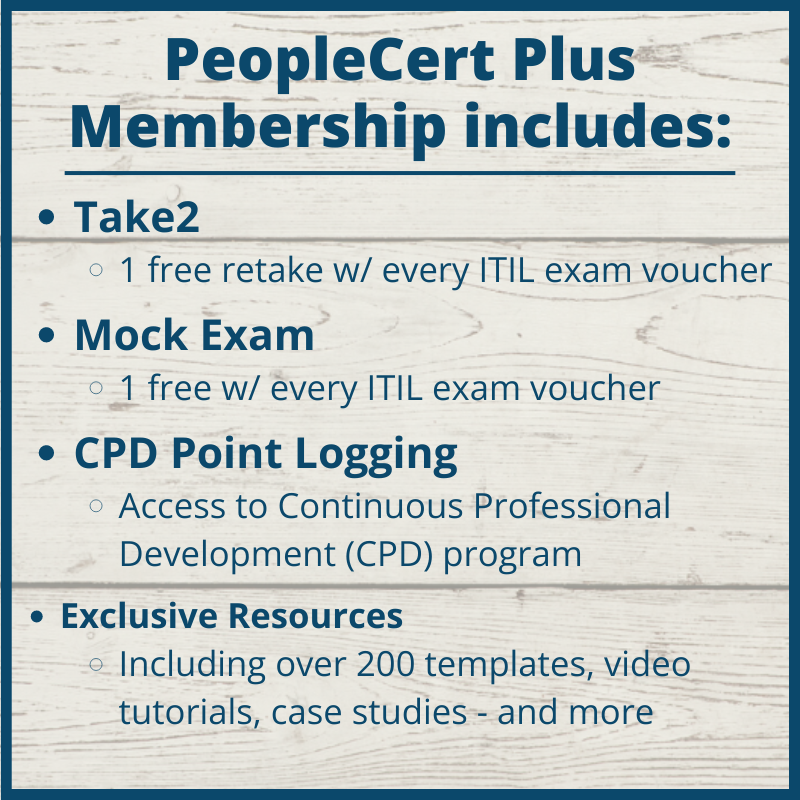
- PeopleCert Plus Annual Membership (not included in Epic class price, can be sourced from our website or by the learner directly from PeopleCert - the owners of ITIL.)
- Access to ITSM Academy's Learner Portal - my.itsmacademy.com - extends the classroom experience with online content and tools
Prerequisites
- ITIL 4 Foundation or ITIL (Version 5) Foundation
- Even if your ITIL Foundation certificate is expired, you can still attend any higher level ITIL (Version 5) course from ITSM Academy. Every successful pass of an ITIL PeopleCert exam will extend the previous expired certificates to the renewal date of the most recent ITIL PeopleCert exam.
- Attend accredited training course (mandatory)
- Complete pre-class reading assignment
- Familiarity with some aspect of IT management, product management, or service management is recommended.
Certification: Learners earn their ITIL (Version 5) Service certificate by achieving a passing score (70%) on a 90-minute, 40-question open-book examination. Read more about the open book exam experience.
>>Official ITIL publications are available for learners who would like access to the reference materials for their open-book exam. You can purchase them here.<<

ITIL® is a registered trademark of the PeopleCert group. Used under licence from PeopleCert. All rights reserved. Used under licence from PeopleCert. All rights reserved.